Focusing on his game, Thon Maker is bulking up and looking forward to his strong future

SUWANEE Ga.—Over the past year, five-star phenom Thon Maker has bulked up. He started lifting weights five days a week, began eating seven meals a day, and gradually bumped the scale beneath his already imposing 7-foot-1 frame from a wiry 191 pounds to solid 218.

And yet, over the past month and a half, Maker has been playing as though a huge weight has been taken off his suddenly broad shoulders.

Last week, Maker averaged a double-double (16.5 points, 11.8 rebounds) while powering his Canada Elite team into the championship game of the Under Armour Association 17U Finals in Suwanee, Ga.  A week prior, he led all players at the Under Armour All-American Camp in Charlotte by pulling down 12.5 boards and blocking 2.2 shots per game.

This reign of domination started back in June, when Maker garnered MVP honors at the NBPA 100 Camp in Charlottesville, Va. It was also at this event that the native of South Sudan announced that he had scrapped his plan to reclassify and try to graduate high school in December so as to be eligible for college in the second semester of next season. Has the decision to play out his senior year at Ontario’s Orangeville Prep affected the big man’s game?

“Definitely,” says Maker. “Now I really get to focus on the game itself.”

So why the sudden 180? Why risk injury, jeopardizing almost certain rewards in college and the pros? Was there concern over the waning interest from scouts after a lackluster junior year at Orangeville? Or perhaps Maker preferred to be the centerpiece of a recruiting class as opposed to a late addition coming in midway through the season.

Maker’s guardian, Ed Smith, says that his ward’s decision to stay in the Class of 2016 was three-fold. First, it relieves the senior of the burden of crashing out a year’s worth of schoolwork in one semester. “I think he was saddled with a lot of academic pressure,” says Smith. “He could’ve finished over the summer or he could’ve finished in the fall and went to college. He got his core work done. Now there’s just a few things he needs to do and he can stretch that out into his senior year.”

Canadian superstar recruit (by way of Sudan) Thon Maker may be on the verge of shaking up the 2015 rankings as he considers reclassification — Louisville Courier-Journal

Second, the postponement of graduation gives Maker time to get used to playing in his new body. Despite pressure from scouts and coaches to quickly add mass to reinforce a gangly body, Maker and Smith chose a more deliberate path.

“We did it the way we wanted,” says Maker. “People wanted us to bulk up straight away and get to playing. That would’ve resulted in injuries and bad plays. We took our time. We didn’t worry about others critiquing that I’m too skinny.”

Packing on 27 pounds of lean muscle to his bones has taken Maker from Manute Bol to more of a Kevin Garnett-style power forward that is now much more of a force closer to the basket, bullying his way to rebounds and blocked shots. Add that to Maker’s already formidable defense and perimeter skills—including ball-handling ability and an outside jump shot that is practically unheard of for a big man—and it’s easy to see why Maker is a Top 10 prospect (No. 8 by Scout.com, No. 9 by Rivals.com), with offers from the NCAA elite, including Arizona, Duke, Kansas, Kentucky, and Louisville.

The third, and perhaps most important consequence of Maker’s decision is that it will enable him to play his entire senior season at Orangeville with his younger brother, 6-foot-11 junior Matur. The two boys fled civil war in South Sudan together and were taken in as refugees in Australia when Maker was 5. There they grew up playing soccer and basketball until Smith discovered the elder Maker and brought him to the U.S. to play basketball five years ago. Smith eventually brought Matur halfway through Maker’s freshman year.

“When Matur joined him, it changed everything,” says Smith. “All of a sudden there was laughter coming from downstairs. They were cutting up and carrying on. It’s just fun. They love each other a lot.”

The bond is obvious. Matur, who plays on the 16U Canada Elite, is front and center at each of his brother’s AAU games, and vice versa. Next year at Orangeville will be their first chance to play on the same team. It may also be their last—while Matur is a four-star prospect in his own right, drawing early interest from some of the same schools as his brother, there is no guarantee that they will attend the same school.

Maker says the benefit of playing with his brother is more than just sentimental.

“I can’t wait for the season to kick off and play with my brother,” says Maker. “Just competing with him in practice—watching us both get better. We’re both physically bigger and mentally stronger, more knowledgeable of the game. It makes it that much better for us to come at each other.”

This article appeared on USATodayHHS.com 

Motivated as an underdog, Markelle Fultz embraces being overlooked

SUWANEE, Ga.—Spectators at this past weekend’s Under Armor Association AAU Circuit Finals might have had a little trouble locating five-star prospect Markelle Fultz. He was listed on the roster as No. 15 for the DC Blue Devils 17-and-under team. That number was nowhere to be found on the court. “They lost my jersey,” said Fultz nonchalantly warming up in an ill-fitting No. 11.

With dozens of college coaches and scouts sitting in the bleachers and standing along the sidelines eyeballing prospective recruits, any other incoming high-school senior would have been alarmed by the sudden blurring of identity.

Fultz, however, seemed unfazed. He is used to being overlooked.

A little more than a year ago, Fultz was a sophomore playing for powerhouse DeMatha Catholic High School (Hyattsville, Md.) on the junior-varsity team. And his AAU Blue Devils weren’t yet affiliated with a major shoe company.

“I think I was always a very talented player,” Fultz said through a mouthful of braces. “I wasn’t always on the best teams, but I always pushed myself to be a better player. What happened to me was I finally got the right opportunity.”

That opportunity was a guest shot on the DC Premiere squad for the Las Vegas Fab 48 tournament last July. Playing a year up in age, Fultz powered the team to the championship. That led to an invitation to John Lucas’s Midwest showcase for underclassmen in Louisville, where Fultz continued to impress. Last year, he averaged 16.8 points and 7.9 boards per game as a junior on DeMatha’s varsity team.

Rather than try to slip that underdog tag in light of his newfound success, Fultz wears it proudly. “When I got my chance, I was filled up with anger for everybody overlooking me,” said Fultz. “I just took advantage—played very well, did very well against nationally ranked players.”

Fultz is now fielding offers from more than 20 colleges, including Arizona, Kentucky, North Carolina, Kansas, and Louisville. And he has kept close tabs on his own rankings among the national class of 2016, which currently sits at 21st on ESPN.com and 23rd onRivals.com.

“On the court I try not to think about the rankings,” said Fultz. “But off the court, I look at it a lot, just trying to see my position and see what I have to do to get better. And to see who is in front of me.”

That sort of frankness with the press—Fultz recently told The Sporting News that Kentucky was no longer his dream school because he “didn’t know (he) was going to be this good,” and The Washington Post that he’d like to be a college one-and-done—may come off as simultaneously naïve and a little bit cocky. But Fultz’s play on the hardwood displays the humbleness more befitting his backstory.

Before tip-off, he goes out of his way to bump the fists of each opponent, and he’s always there to pick a fouled teammate off the floor. A lanky 6-foot-4, he doesn’t show the explosive athleticism of some of his peers, instead sort of gliding up and down the court. He’s a quiet stalwart on defense, and his jump shot is a living sculpture.

Fultz’s height enables him to play all five positions in high school, and he says his body still hasn’t grown into his size-16 feet. But even as someone else’s No. 11 jersey hung loosely from his shoulders, the role of overachiever seemed to fit Fultz perfectly.

“My mindset is to always play like I’m not known,” he said. “I just act like there’s nobody in the stands, nobody watching me.”

That isn’t a hard scenario for Fultz to imagine.

This article appeared on USATodayHHS.com 

Seventh Woods keeps showing his game has more than just a mixtape

SUWANEE, Ga. — It’s 5 p.m. on a Wednesday, the first exhibition game of the four-day Under Armour Association Finals, and a modest crowd has gathered at Court No. 5.

Almost every player who isn’t scheduled to play in one of the six other early games is standing along the west baseline, thumbs gripping backpack straps; on the opposite side, metal bleachers and folding chairs bear an equally interested cluster of college coaches. Assistants from Indiana, Virginia, and Connecticut. South Carolina’s Frank Martin. North Carolina’s Roy Williams.

Warming up, 17-year-old Seventh Woods wears a black tee shirt over his No. 3, almost as if he’s trying to hide from the attention. But even the 6-foot-2 guard’s casual layup drills display that flash-bulb first step, the sort of freakish athleticism that draws eyes. Besides, after winning gold as the youngest member of USA Basketball’s national team, an ESPNSportsCenter Top Play dunk that bested a LeBron James jam, and a YouTube mixtape that boasts 13 million views and counting, people know his face.

All that was back in 2013. Since then, a broken wrist hampered his sophomore season at the Hammond School (Columbia, S.C.) and scrubbed most of his 2014 AAU summer. He remains a five-star prospect, but his Rivals.com ranking slipped from No. 12 overall in the class of 2016 to No. 25. And a fickle public began to move on. Strangers are no longer asking him to take photos with their newborns at away games.

“It’s kind of died down,” says Woods, the sixth child in the Woods family (he’s named after the seventh day of creation from the Book of Genesis). “When I came back from my injury, I was sort of out of sight, out of mind. And I wasn’t trying to make highlights. I was just trying to play great basketball.”

He says he still feels pressure from fans expecting to see gravity defied, the acrobatics, reverse dunks and two-handed put-backs from the 14-year-old kid in the mixtape. Woods already has offers from North Carolina, South Carolina, Clemson and Wichita State and says Florida and Georgetown have come after him hard.

In reality, scoring probably isn’t even the best part of his game — it certainly doesn’t seem to be the most natural to him. From the point, Woods displays an almost panoramic vision of the court. When he opens this game with a laser no-look bounce pass from the point to a teammate who drains a jumper from the wing, the gallery’s disappointment is almost palpable. He obliges on the second possession, dribbling straight through two defenders for a seemingly easy lay-in.

“Sometimes we have to tell him not to be so selfless,” says Woods’s AAU coach Daryl Jarvis. “We have to remind him: You have the ability to take over. But sometimes we get caught standing around watching. Sometimes we ask him to do more than he really needs to do.”

The precariousness of that balance — between Woods’s instinct to assist and his obligation to take command — becomes apparent as a close game draws down to the wire. He stumbles trying to dribble through a double team as the shot clock expires. Drives the hoop only to loose the ball in an out-of-control spin move. Then at the other end, he soars in to block a go-ahead layup from behind. Woods has also said that his perimeter defense is among the qualities in his game that often gets overlooked.

Woods’s Carolina Wolves are down 62-60 with 22.2 seconds remaining. The on-looking players are now packed three deep beyond the baseline, tip-toeing and leaning left and right to get a better view. More coaches have taken note as well.

Woods inbounds the ball, dribbles hard against the press to the top of the key, where he tries to post up against a double team. He trips and loses the ball. The ref whistles a foul. There are 2.3 seconds on the clock. Woods will get three free throws. A chance to win the game.

His first shot clanks off the front of the rim. Woods shakes his head.

The second shot rims in and out. He slaps his hands in disgust.

The third shot bounces off the rim and hits the backboard, but one of Woods’s teammates darts into the lane and leaps over his blocker to tip the ball and bank it in for the buzzer-beating basket. Carolina’s bench rushes the court, the entire team swarming the unlikely hero who tied the game at 62.

Except for Woods. He stands alone at the free-throw line and stares down at the paint. His coach tells him to shake it off — big-time players like him are going to make big-time plays, and there will be plenty more to make in this tournament.

“I know I’m a better player than I show sometimes,” Woods will say later. “As long as I keep putting the work in, I don’t think the attention will ever go away. I’m already a great player, and I can only get better.”

But as the refs tip the ball to begin overtime, the crowd around Court. No. 5 has thinned noticeably. The players and coaches have moved on to other courts, where other big-time prospects are making big-time plays.

This article appeared on USATodayHHS.com 

Prescription Drug Addiction In America

1207-drugstoreRYAN DONNELLY HAD IT DOWN COLD. THREE years ago he was a 25-year-old Navy vet who had been booted from the service for a failed drug test, cycled through cocaine to alcohol, and finally landed on a 560-milligram-a-day oxycodone addiction. To maintain his habit, Donnelly stole prescription pads. When those ran out, he dipped legitimate scrips in nail polish remover to strip away the physicians’ scribblings. He then took his forgeries to more than 20 pharmacies in and around his hometown of Toms River, New Jersey.

Today when the clean and sober Donnelly looks back on those years, he knows there were obvious signs of his addiction that anyone, especially an experienced pharmacist, could have picked up on.

“When you’re withdrawing, your upper lip and your forehead sweat; you look like you have the flu,” says Donnelly, who now runs FreeFromHell.com, a social support website for recovering addicts. He says sometimes he’d even put on a suit in an effort to look normal. “You try to pull it together, but you end up looking like a hoodlum.”

If the red flags were there for all behind the counter to see, why didn’t anyone turn Donnelly away—or better yet, turn him in? Fortunately, a family intervention finally pushed the pillhead to rehab before he could hurt himself or anyone else.

Things ended more tragically in the case of David Laffer. In June 2011, Laffer walked into a Long Island pharmacy and shot the pharmacist, a 17-year-old employee, and two customers while stealing hydrocodone, a semisynthetic opioid derived from codeine. In the 12 days before the killings, he had filled six prescriptions from five different doctors for a total of more than 400 pills, according to one Long Island newspaper.

“We sometimes lose sight of the fact that pharmacists are trained to spot drug-seeking behavior,” says Luis Bauza, director of investigations at RxPatrol, an alliance formed between local law enforcement and the drug company Purdue Pharma, which makes OxyContin, to track pharmacy fraud and thefts across the country. “I see pharmacists as our last line of defense.”

Read the rest at menshealth.com

Giving Nashville The Boot

Last year, three of the top six moneymakers in country music were Georgia boys: Macon’s Jason Aldean, Leesburg’s Luke Bryan, and Dahlonega’s Zac Brown Band. Scroll farther down the country charts and the Peach State continues to represent: Florida Georgia Line’s Tyler Hubbard (Monroe), Lady Antebellum’s Charles Kelley and Dave Haywood (both from Augusta), and Kip Moore (Tifton). Of course, Georgia has a long tradition of producing musical talent across all genres, from Otis Redding to the Indigo Girls to R.E.M. to Ludacris to India.Arie to 2 Chainz. Even the lyrics to “Moon River” were written by a Georgian. Rappers still come to Atlanta to be part of the city’s hip-hop scene. But country artists? They leave for Nashville. Or do they? Here in Georgia, a few country musicians are taking a pass on Music City, choosing not just to live here but to write, record, and perform here. The decision comes at a cost.

Levi Lowrey
Levi Lowrey on the road.

PHOTOGRAPH BY BEN RASMUSSEN

In a cluttered storage room above a friend’s garage in Dacula, 31-year-old Levi Lowrey hunches over a MacBook, playing back some vocal tracks he recorded. He hides a young face behind a bushy black beard, and if you didn’t know him, you might think he was just a computer geek sitting amid dusty exercise equipment and old boxes.

Those who do know Lowrey might think something different: that this is a dismal place to be at this point in his music career. He’s released two albums with Zac Brown as a producer; has recorded with Nashville legends like Dobro virtuoso Jerry Douglas and banjo master Darrell Scott; played Ryman Auditorium and Madison Square Garden as an opening act; and written two of Zac Brown Band’s biggest hits, including “Colder Weather,” which garnered Lowrey a Country Music Association Award nomination for song of the year.

But the songs coming out of his laptop are unlike anything you’d hear at the CMAs; they’re frenetic, bouncing among Southern rock, pop, bluegrass, alternative, and folk. There’s even a sea chantey. The lyrics are deeply personal: about his wife’s cancer and his own neglect of family in pursuit of professional success. Lowrey’s new album, “My Crazy Head,” which he recorded entirely himself in this room and his basement, is a liberation from more than five years of Nashville restraint. “The title song is my country anthem,” he says. “Now I can do whatever I want.”

Read the rest at atlantamagazine.com

These Sisters Are The Real-Life Action Heroes

IMG_0681Aby Martin is used to being the guinea pig. As the youngest of the three Martin sisters, she is always the first in line to be punched, shot at, thrown from a roof, or dropped from the ceiling. Her father, Anderson Martin, jokingly refers to her as “dead weight” because she is so often the crash-test dummy (sometimes literally in the driver’s seat of a soon-to-be-crumpled car) when he’s trying to teach his girls about the family trade — movie stunt performance. Yet even the adventuresome 24-year-old is timid about today’s lesson: How To Get Kicked In The Crotch.

“I don’t want to do it,” she says, pouting in a long blond ponytail, yoga pants and tank top.

“You’re doing it,” says her father, on his knees before her, sweat rolling off his nose as he jury-rigs ankle cuffs to a pelvic harness he’s just strapped to his baby. “A stunt person is called in to be ready for anything.”

Late-morning sun pours in through the open bay door of Anderson’s dusty, 4,500-square-foot warehouse along the main drag of Carrollton, Georgia, a bedroom community about an hour outside of Atlanta. Ropes and harnesses are strung from the rafters. Air mats, pads and sheets of cardboard are spread across the concrete floor. Aby’s older sisters, Ashley Rae Trisler and Alex Duke, look on from the sidelines, giggling as their father rises — fairly confident that the makeshift device he’s concocted is in place.

He’s run a black strap from one ankle cuff up the inside of Aby’s leg, through a loop in the pelvic harness and down to the opposite ankle cuff, forming an inverted “V” between her legs. The entire apparatus is snug enough to slip seamlessly beneath a pair of pants or a long skirt. The idea is that when an actor or fellow stunt artist steps up to punt Aby’s privates, the point of the “V” will catch the leg inches short of her body and distribute the impact down to her legs and ankles. And in this instance, the kicker will be played by her father.

“Ready?” he says. ”

No,” says Aby. “I don’t like this.”

Heedless, Anderson lurches forward and starts to lift his leg in a deliberate slo-mo. Aby cringes and he stops.

Of course, the whole point of this exercise is that once the behind-the-scenes precautions are taken, it’s time for the stunt artist to become an actor.

“You’re scared,” he says. “It’s not like you have balls.”

“That doesn’t mean it doesn’t hurt,” she says.

“Well,” he says, “that’s why we use this device.”

—–

Perhaps Aby is skittish because her neck is still sore from having been body-slammed for multiple takes last week on a super-secretive drama series. (Her father scolded her for making the rookie mistake of letting her head flop — “But that’s what the director wanted!”). Or maybe it’s her broken and dislocated nose from a softball mishap last month (“I never get that seriously hurt while I work”). Or, it could be the fact that last fall, she had to be punched in the crotch by actor Skyler Gisondo in a Wally World melee for the blockbuster Vacation reboot (for a punch there is no fail-safe apparatus, just a little padding and a lot of praying).

Read the rest at espn.go.com

Bible Belter

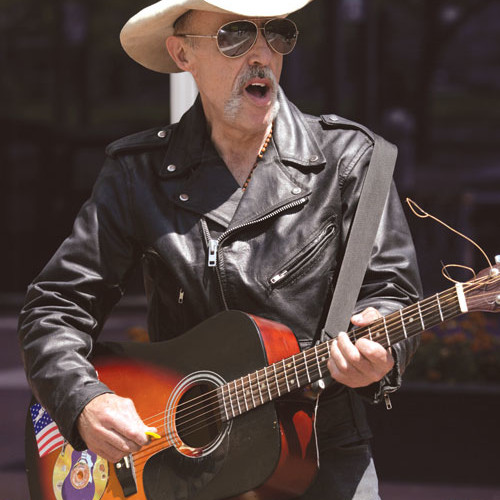
Bible-Belter-500x500The midday sun has finally emerged from behind the top tier of the Circle Tower in downtown Indianapolis, and gradually, it starts to lift the building’s broad shadow. Sunshine slowly pours into Monument Circle. The old cowboy grins.

Bending forward over the guitar strapped to his torso, the cowboy drags his guitar case onto a newly illuminated patch of brick sidewalk. “I follow the sun,” he says, gruff through a mouth of mangled yellow and brown teeth. “It’s nice in the sun.”

Today the sun, a steaming cup of black coffee and the Doral Ultra Light he’s pulled from his coat pocket are his only sources of warmth. It’s March 22, the second day of spring on the calendar, but a bitter breeze reminds the red-faced man that winter still holds sway. With one callused, wind-burnt hand, he flicks the flint of a lighter while shielding its flame with the other. The temperature flashing on the Emmis Building marquee across the way says 43 degrees, but damned if it doesn’t feel colder to the cowboy. He’s hungry. Hasn’t eaten since early this morning, and he’s fighting a cold. But “as long as the sun’s out,” he says, “I’ll be okay.”

After a couple drags, the cowboy checks his watch. Break’s over. He swipes off the lit end of the cigarette and sticks the remainder back in his pocket. He clears his throat, hocks phlegm from the back of his esophagus and spits the wad onto the sidewalk, smearing and spreading it out with his boot so as not to offend the passersby. He caresses his guitar, checking the tuning of its strings to make sure the cold hasn’t warped them, then looks up at the sky, the sun gleaming on his smudged sunglasses. Pulling a pick out of his hatband, he strums a slightly sour D chord. Then, in a deep, soulful vibrato that should belong to a much bigger man, the cowboy sings. He is Lord, He is Lord, He is risen from the dead …

At that instant, as his distinctive baritone moan sounds strong and true, bouncing off the buildings and filling the Circle, he becomes what he is to most people: an element of the downtown environment almost as familiar as the Monument itself. As the words of the old spiritual spill from his chapped lips and rise into the air, he becomes visible to the people of the city street as the “Christian Cowboy.”

Read the rest at Indianapolis Monthly

Mike Tokars: What happened to the boy who witnessed his mother’s murder?

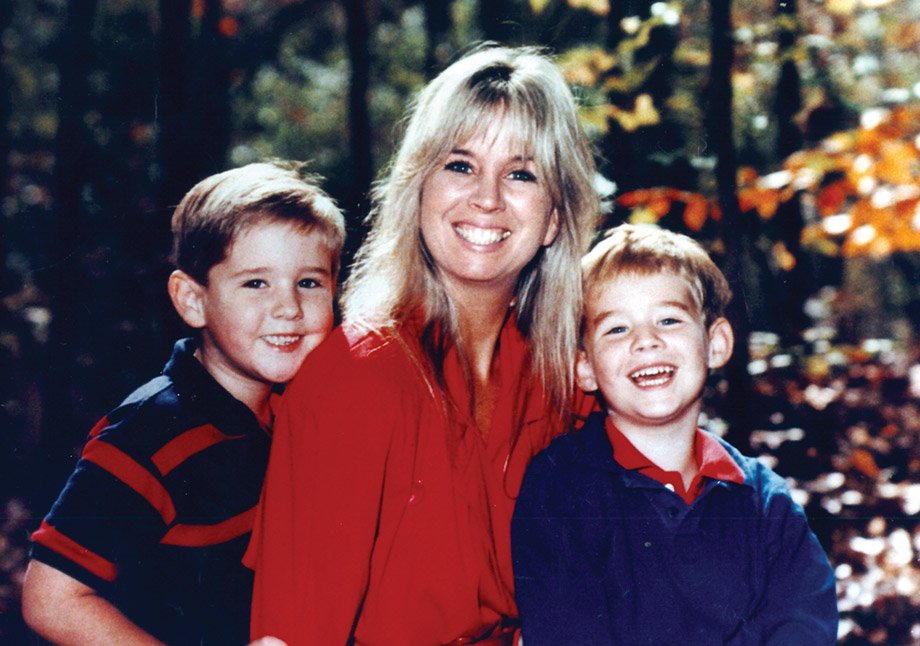
tokarsMike Tokars was four years old on November 29, 1992. Yet he remembers the events of that night clearly, and he recounts them with an almost unsettling calm.

He recalls waking up in the back of his mother’s 4Runner, which was in the garage of the family’s East Cobb home. A strange man emerged from the house with a sawed-off shotgun. The stranger kicked the family’s Springer Spaniel, Jake; jumped into the backseat beside Mike; and ordered Mike’s mother, Sara Tokars, to drive to a vacant residential development about a half mile away, where she pulled over. Then a gunshot. The stranger fled. From the passenger seat, Mike’s six-year-old brother, Rick, leaned over and turned off the ignition. Seeing their mother slumped over the steering wheel, Rick told Mike they had to go for help. But Mike sensed she was dead. The two boys ran about a hundred yards through the dark, through bushes with thorns that cut them, their blood mixing with that of their mother. The next morning, over a breakfast of their uncle’s waffles, the two boys kept saying: If only Dad had been there with his gun.

The brothers moved in with their maternal grandparents in coastal Bradenton, Florida. Their father, Fred Tokars—a high-profile Atlanta criminal defense attorney—would call and occasionally visit. He phoned on Mike’s sixth birthday, but when Mike tried to pass the phone to his brother, Rick refused. They both knew their father had been arrested, but Rick knew the implications. Back in Atlanta, Fred Tokars was charged with hiring the stranger, Curtis Rower, to kill Sara in an attempt to cover up his secret life of drug trafficking and money laundering. Mike never spoke to his father again. “At that point, he was no longer a good guy in my eyes,” says Mike.

Fred Tokars’s 1997 trial and conviction was broadcast nationally on Court TV. Mike did not attend. Family and friends shielded the boys, but “sometimes it would come up,” says Mike. “And when it didn’t, I knew that they knew.” Eventually public memory of the tragedy faded. “As we got older, we had more control over who knew,” says Mike. “I was always open about it with my close friends. I wanted to explain—talking about my parents made me feel like a normal person.” Mike says that wasn’t the case with his brother, who was much more guarded. “I can’t remember a single instance of us talking about it,” says Mike. “We didn’t need to.” On the 10th anniversary of their mother’s murder, Mike tried to broach the topic; Rick cut him off, and the two went surfing.

Rick went to college in San Diego and is now an avid surfer and traveler. Mike stayed closer to home, attending Tallahassee Community College and then the University of South Florida, where he majored in history and English literature. But he devoted more time and energy to touring the South by van and playing guitar in punk rock and ska bands. Reading “The Rum Diary” by Hunter S. Thompson inspired him to become a reporter and writer, so he moved to New York, where he interned and freelanced. On a whim, he applied to the Master of Journalism program at Columbia University and was shocked to be accepted. He plans to graduate this spring.

Reporters occasionally contact Mike about his parents; from inside prison his father has become a prolific prosecution witness, having helped solve six murders. Mike says his experience gives him insight into and empathy for the people he writes about who have suffered loss. More than anything, facing evil at such an early age has shaped the way he has approached his own life. “I don’t take anything for granted, don’t expect to be comfortable or safe,” he says. That’s not necessarily negative, he explains, using a surfing analogy: “When you’re in the water, you always worry that there’s a shark. But there’s a calmness when you actually spot a fin—you know the evil is there.”

—30—

Published in the March 2015 issue of Atlanta

Life After Lee

GSU2Allison Webb parked on the side of Charles Allen Drive as she had done dozens of times before.

But this time it took her five minutes to talk herself out of the car. The familiarity of this Midtown neighborhood was bittersweet. Lee had lived in a ground-floor apartment just down the road. Together they had shopped at Trader Joe’s and eaten at Woody’s CheeseSteaks, snapshot memories of her son that could one moment comfort her and the next send her spiraling into despair.

Crossing the street to the campus of Henry W. Grady High School was especially surreal. It was 11 a.m. on a Thursday in mid-December, and the classrooms were bright and bustling. As Webb passed each window, she could imagine Lee sitting at his desk, cutting up with friends, flirting with the girls. Flashing that perfect smile. She approached the old brick entrance, climbed the stairs, and stopped before the heavy gray doors. She pressed the intercom button and told the voice in the box her name and that she was there to see the counselors. As she waited to be buzzed in, Webb remembered the countless times she had stood in that very spot holding the lunch or the book that Lee had forgotten. More than once, she had paced there, empty-handed, worried, wondering what he had done to get sent to the office this time.

This time, Webb was here to help other kids in trouble. She had an appointment to speak with the faculty about the Lee Project, a non-profit initiative that partnered with the Georgia State College of Arts and Sciences to provide scholarships to high school students who’ve dealt with tragedy or extraordinary adversity.

The program began as a way for Webb to memorialize her son’s life. It became a reason for her to go on with her own.

It’s hard to remember her life before Lee.

She was 22, a student at Guilford Technical Community College in North Carolina, when she got pregnant. She and Lee’s father split when Lee was 11 weeks old. Webb got a job at a dry cleaner. She left college, but promised herself she would go back once Lee graduated high school.

Read the rest at magazine.gsu.edu

History and “Hate Ashbury”

GSU1Kristina Graves was sure she was mistaken.

She was in the arena at the Yaraab Shriners Temple on Ponce de Leon Avenue, cheering on the Atlanta Rollergirls, the local flat-track roller derby team, and from her trackside seat she could have sworn she recognized one of the skaters zipping by.

That looks just like Dr. Brattain!

Graves’s former history professor at Georgia State and the “jammer” in question did share the same compact build — muscular shoulders squared atop a petite, wiry frame. The dark brown hair creeping from beneath the rim of the skater’s black helmet matched as well. Still, the idea that the same sweet woman who had once lectured Graves on Nixon and Kennedy and the Vietnam War and gently nudged her to pursue a master’s degree would be spending her Saturday nights gliding around in circles, exchanging elbows and body checks with sweaty, tattooed women twice her size seemed, at best, far-fetched.

The program offered little help — the “67” written in marker on the jammer’s arms was registered to Hate Ashbury, a skater alias.

There was only one way to be certain. After the final buzzer had ended the bout, Graves worked her way through the scattering crowd to the floor, toward the home bench where Hate Ashbury was greeting fans, grinning, celebrating her team’s victory. Even as she drew closer, Graves couldn’t shake her uncertainty. But by the time Graves was within shouting distance, before the former student could work up the courage to say anything, Michelle Brattain spun around on her skates, eyes widened with pleasant surprise and cried, “Kristina! Oh my gosh, you’re here!” Teacher hugged student and asked what she thought of the bout.

A few years prior, it was Brattain sitting trackside, wondering if she could see herself out there on eight wheels.

Read the rest at magazine.gsu.edu